Edna St. Vincent Millay – Huntsman, What Quarry? 1939 Harper & Brothers, Publishers
Set the foot down with distrust upon the crust of the world — it is thin Moles are at work beneath us; they have tunneled the sub-soil With separate changers; which at an appointed knock Could be as one, could intersect and interlock. We walk on the skin. Of life. No toil. Of rake or hoe, no lime, no phosphate, no rotation of crops, no irrigation of the land, Will coax the limp and flattened grain to stand On that bad day, or feed to strength the nibbled roots of our nation.
Ease has demoralized us, nearly so; we know Nothing of the rigours of winter; the house has a roof against — the car a top against — the snow. All will be well, we say; it is a habit, like the rising of the sun, For our country to prosper; who can prevail against us? No one. The house has a roof; but the boards of its floor are rotting, and hall upon hall The moles have built their palace beneath us; we have not far to fall.
16,000,000 military personnel were deployed during the span of WWII.1
LIFE Magazine excelled at capturing candid photographs. There was a phenomenal staff photographer on their payroll. His name was Alfred Eisenstaedt. You can learn more about Alfred’s life here. He was based out of LIFE’s offices in NYC. His most famous photograph might be the VJ Day kiss in Times Square. Photographs he took during the WWII years were often weighty and important. He wasn’t one to shy away from the gritty side of life.
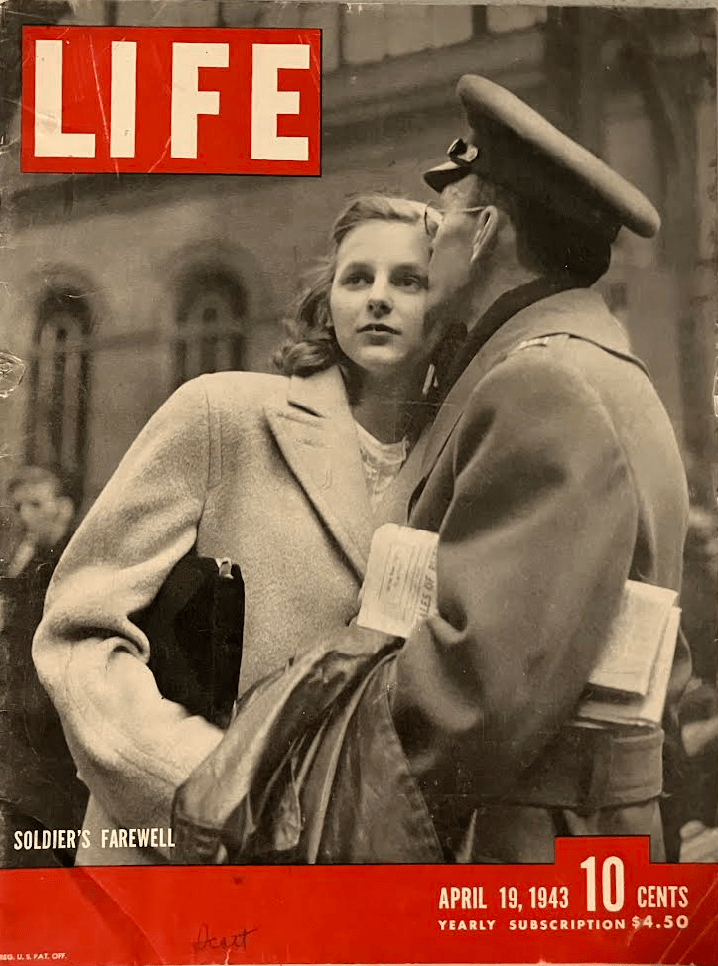
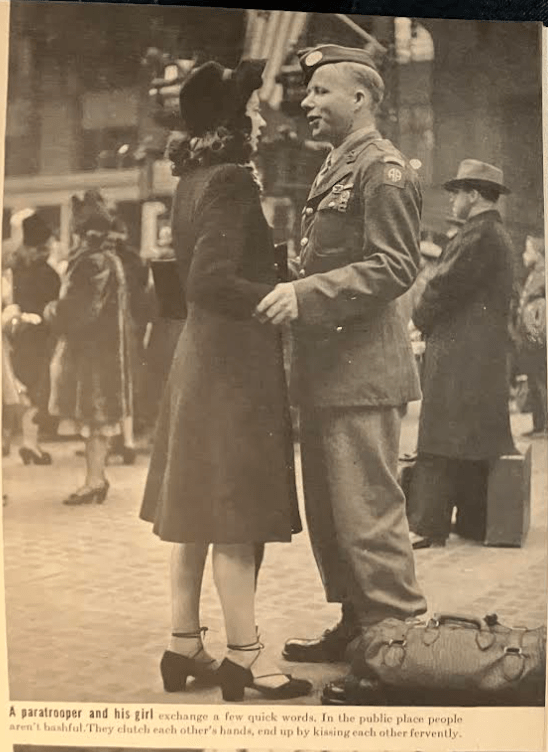
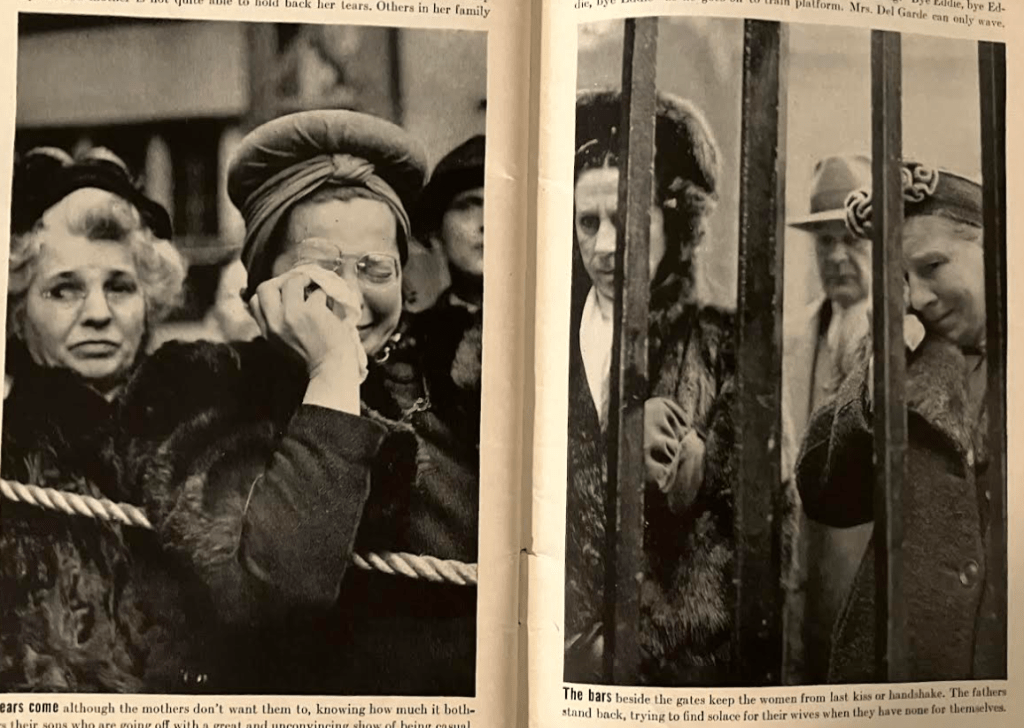
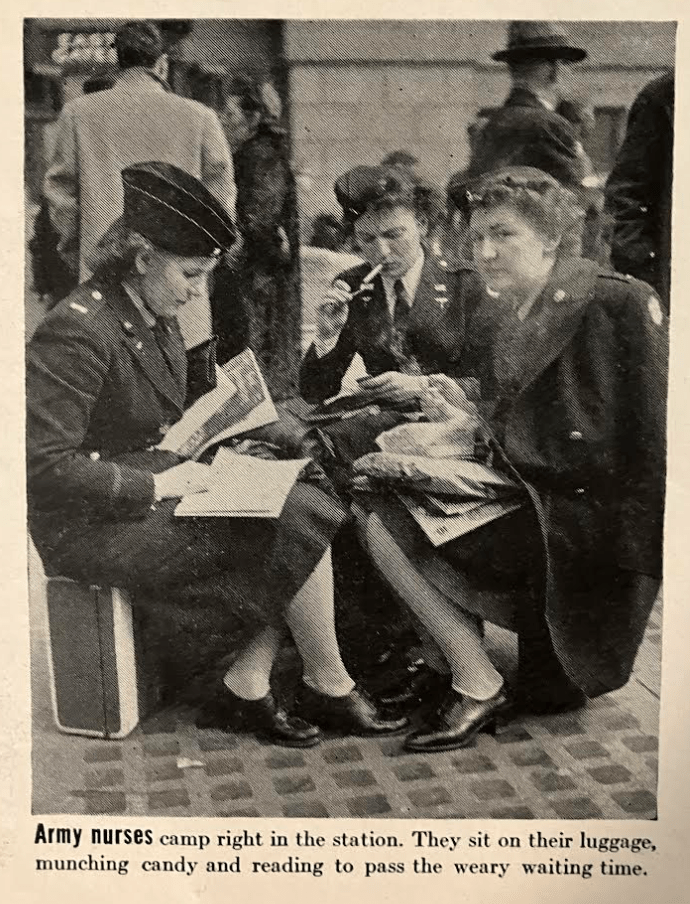
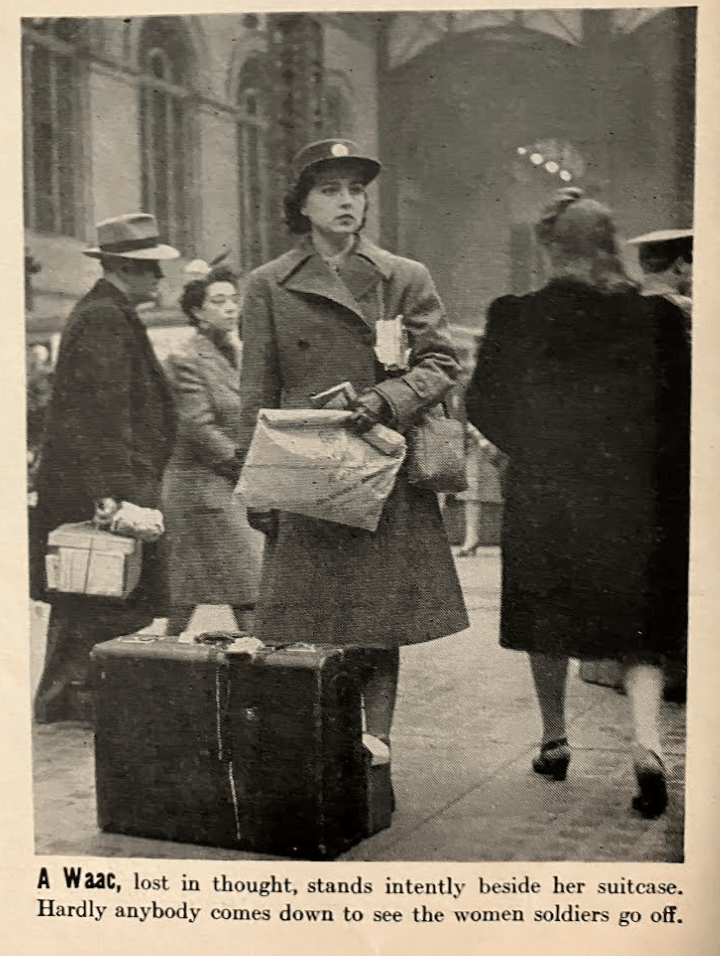
For a quick coffee break, I’d like to share some lesser known photographs he took. They were featured in LIFE Magazine’s April 19, 1943 issue. While this coffee break may not be uplifting, I feel these photographs are important illustrations, encapsulating the daily reality for thousands upon thousands of US citizens. Consider the time these photos were distributed. The United States had been to war for two solid years, with no end in sight.
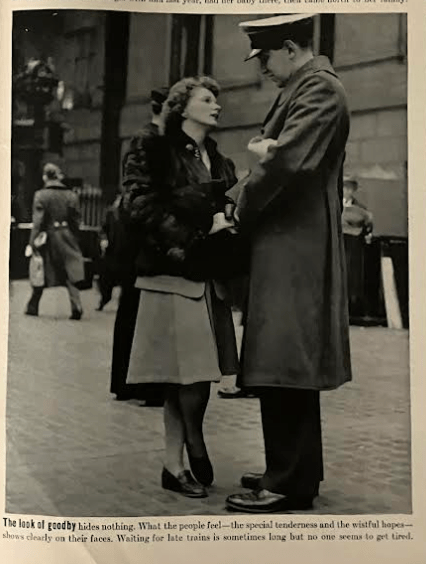
The pictures speak for themselves. With each one, I wonder what happened to these people. The ones anxiously waiting to board and go off to war. A war they might have already seen, but most likely not. This very well could have been their first deployment. Did any of them really know what they were heading off to? How could they? What of the ones they left behind? These pictures sadden me.
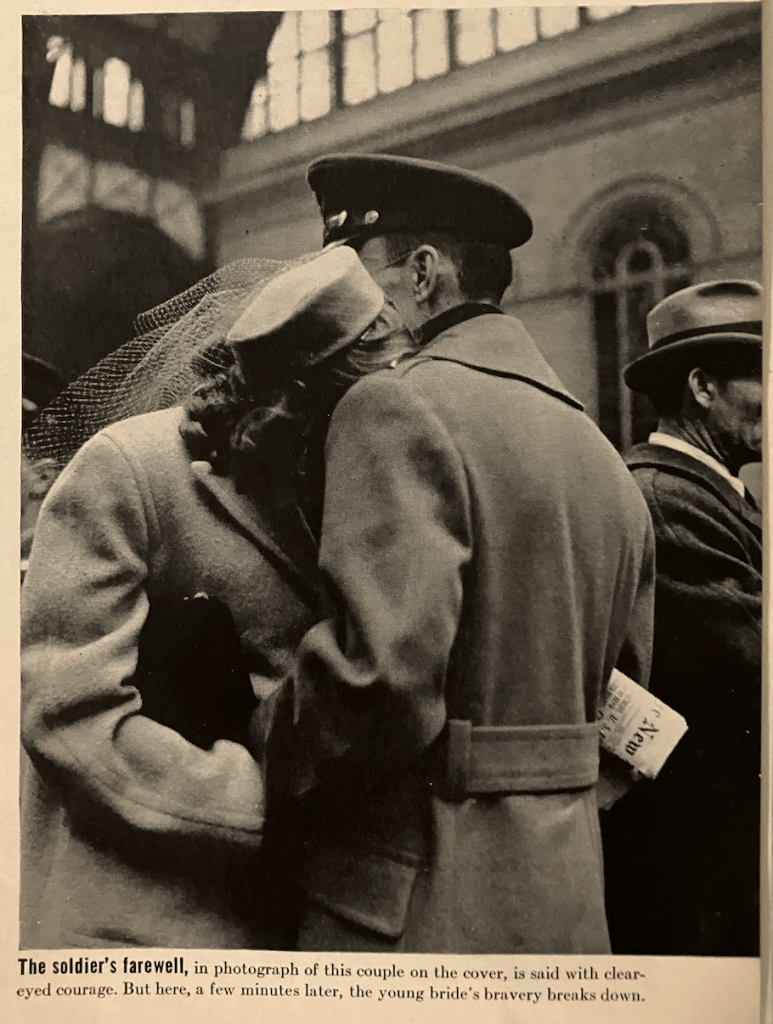
The new bride from the cover photo2. Will she ever see her groom again?
The new mother, wondering if her baby will ever really know its father? Will he be coming home to see the baby grown up?
Loved ones nervous as to what the future holds.
Tears people can’t contain. Emotions running so high.
Nurses enlisting to do what they feel is the right thing.
This one hits me in the gut. The caption is so depressing.
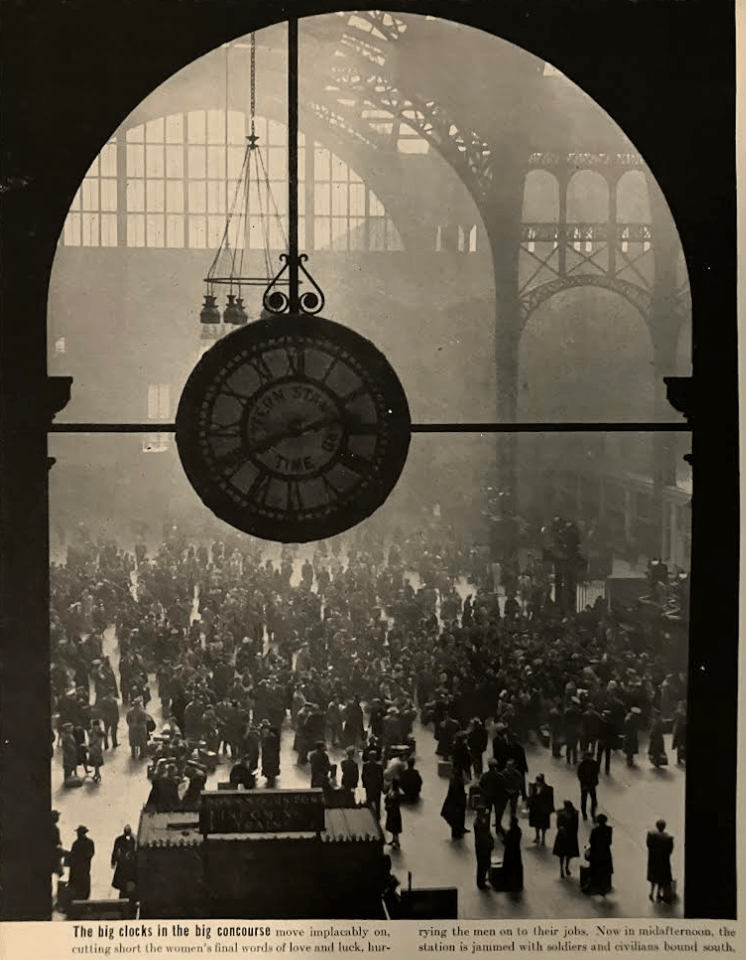
This overhead shot Eisenstaedt took shows the scene from a bird’s eye view.
And this was just one day, out of 1,365 days that the US was at war. Just one day at one station in the country. Even though the numbers being deployed fluctuated from day to day, the scene was the same. Nervousness, sadness, weariness, loneliness, and headache settled in like a fog.
I simply cannot even imagine what this generation went through.
Gnam, Carl. “U.S. Involvement in WWII: How (and How Much) the Military Grew.” Warfare History Network, 26 June 2017, warfarehistorynetwork.com/us-involvement-in-wwii-how-the-military-grew/. ↩︎
The picture is of Lieutenant John Hancock Spear and his wife Ester. Page 20 of this issue of LIFE says they were married for four days before he had to go off to war. ↩︎
Vintage Advertisement of the Week – October 24, 2024
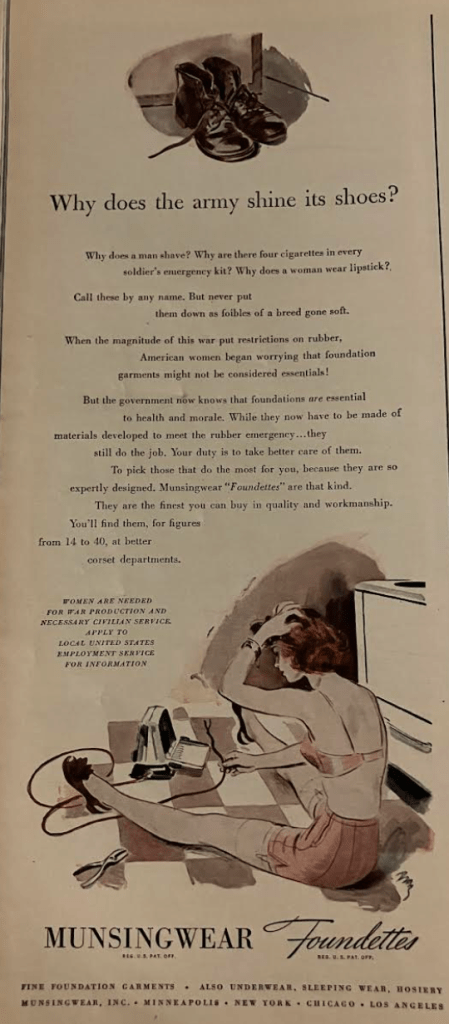
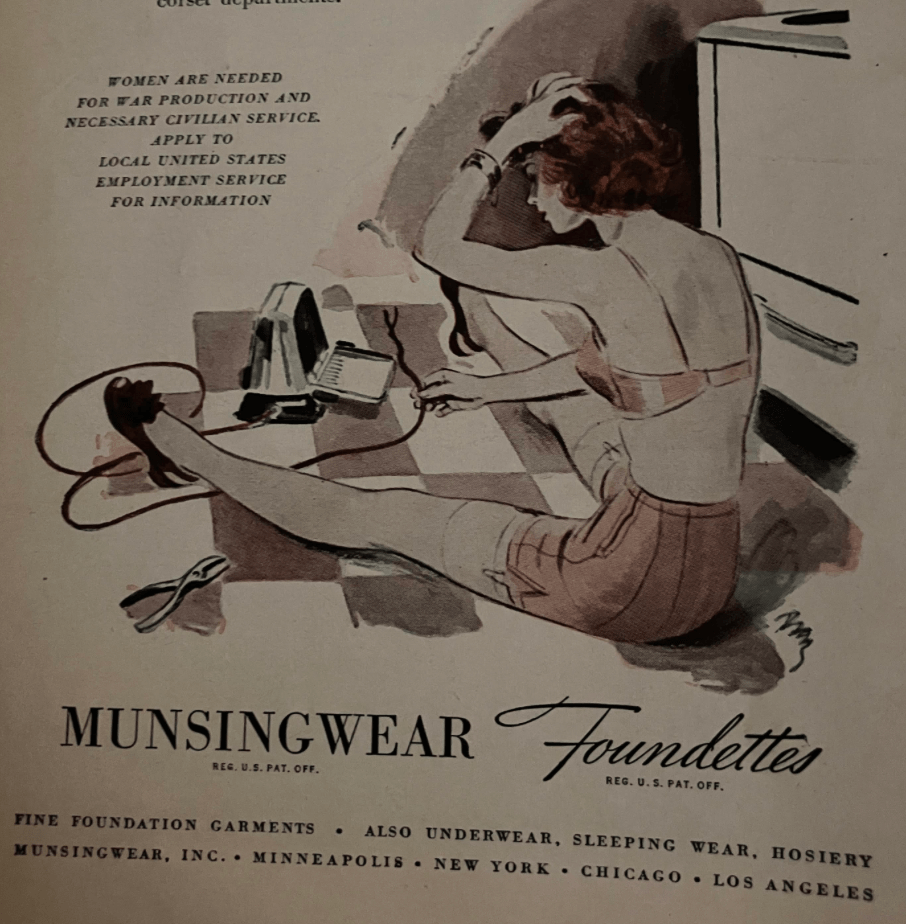
Advertisement taken from Life Magazine, September 27, 1943
The main theme for 80 percent of all ads featured in Life Magazine during WWII was war related. It dominated all facets of life. One could not escape it – the war. In some ways it is quite commendable. In others, I can see how it might have been a drag. Such a heavy cloud of responsibility loomed over everyone. One false step and you were playing into the hands of the Axis. Advertisements of this period were rife with guilt and fear.
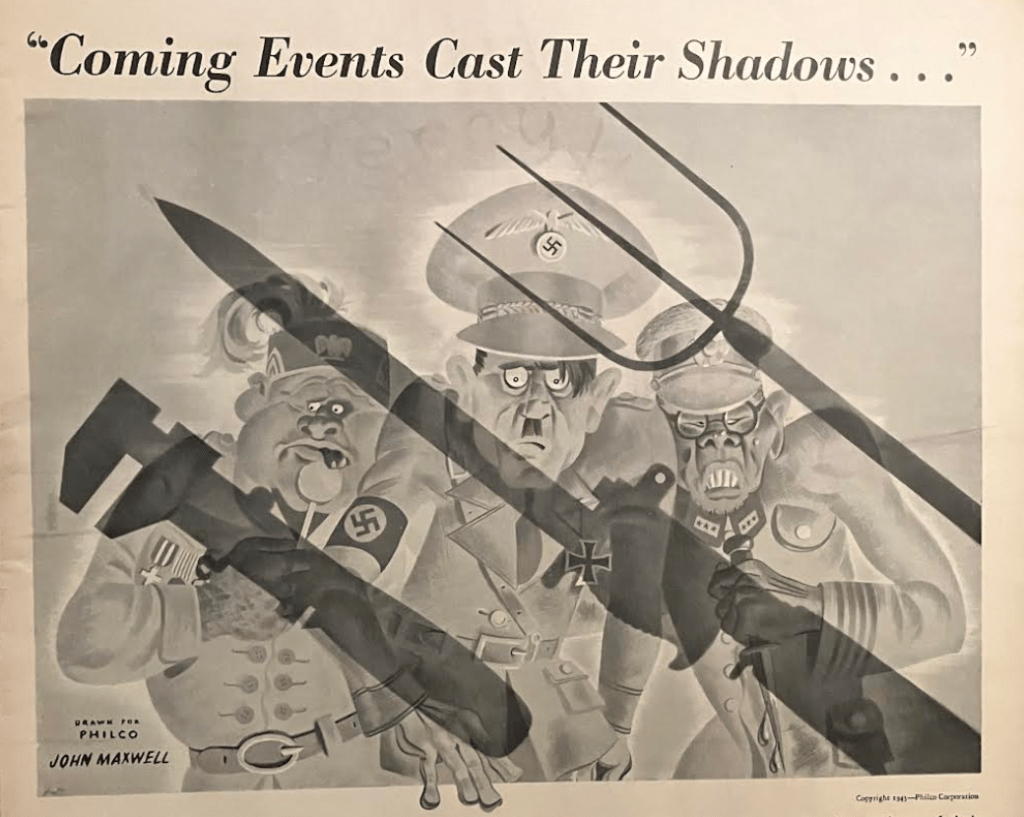
Didn’t buy enough war bonds or stamps? You’re playing right into the hands of the enemy. Images like this loomed large:
Illustrator – John Maxwell, for the Philco Corporation (Life Magazine – April 19, 1943) (Note, I’m not sure what Maxwell was doing with Mussolini. Is that a lollipop he’s eating? Is he trying to paint Mussolini as an infant? For some reason I cannot get Kojak out of my head. Hitler and Hirohito look like they came straight from a nightmare though – legitimately.)
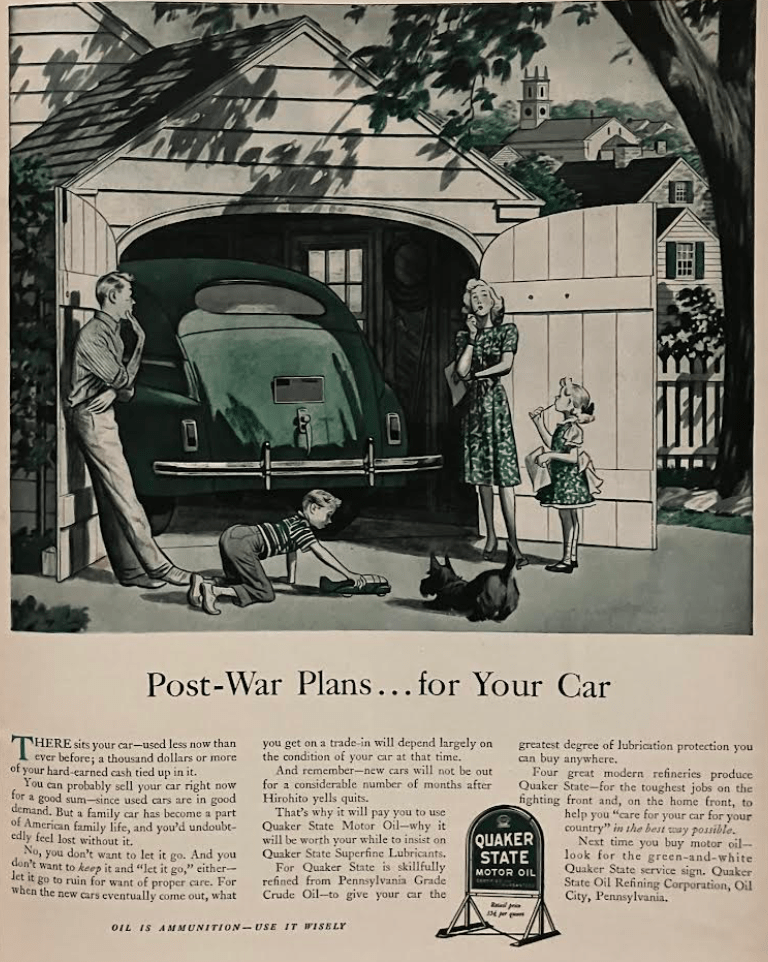
Contemplating using your automobile to get downtown? Better think again and use your own two feet. You won’t be able to replace those tires anytime soon, because rubber is needed for the war, not you. Not to mention wasting gas. Save the car only for emergencies. Ads like this with cars stuck in garages, unable to be used, were common sights:
Life Magazine – September 13, 1943
This week’s ad, leans on the flip side of guilt, morale. Questions like:
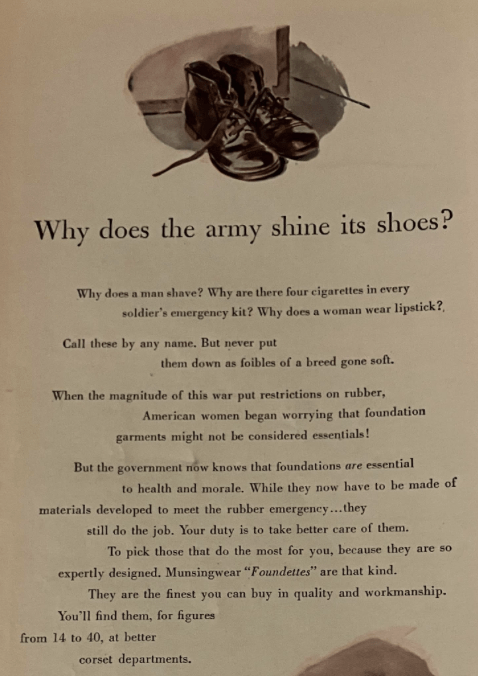
Why does a man shave?
Why are there four cigarettes in every army mess kit?
Why does a woman wear lipstick?
Why does the army shine its shoes?
Why bother? Why do all this when there is a war on? Because it bolsters humanity. It connects us with who we are and what we value. So why should the reader of LifeMagazine care if materials used to make women’s undergarments (rubber and nylon) are considered as part of the essential materials list? Because even during war time, people like to feel attractive.
Another good reason, was it was an extremely influential periodical of its day. Maybe the most influential.1 Even though Life Magazine’s readership was overwhelming male, they still tried to reach their female readers. It was one of the most highly read publications of its time. At one point during the war, its circulation topped 13 million copies.2 That’s a lot, considering the entire US population 139,928,165.3
Back to our ad and why it matters. At first glance, we may think, who on earth would buy this scene? A pretty young 16-25 year old female is sitting on her kitchen floor in her underwear trying to fix the frayed wire of a toaster. Who traipses around their house in their underwear doing DIY projects? Wearing shoes, nonetheless? It is a bit strange to me.
That aside, I love the fact that Munsingwear has chosen to highlight the pluck and industriousness of the young female spirit. She can take it as it comes. A frayed wire with no man around to ask for help? No problem! She can fix it herself. She’s got the grit. She’s got the know-how.
Not enough rubber or nylon4 to make the girdle she’s used to wearing, no matter, she’s got gumption, she’s got that can-do attitude. She can get used to these newer knit fabrics and save the rubber and nylon that would have been used on her girdle to put toward the war effort.
This ad does not specify that the undergarments they are selling are made of knitted materials instead of rubber, but we should assume they are spun elastics.5 Tires were rationed not long after the attack on Pearl Harbor, January of 1942 to be specific.6 So they surely were not made with any rubber. Nylon was needed for making parachutes, tire cords, ropes, aircraft fuel tanks, shoe laces, mosquito netting and hammocks.7
My favorite part of this ad is the call Munsingwear puts out to all women. That little paragraph that pleads, “Women are needed for war production and necessary civilian service. Apply to local United States employment service for information.”
Not only can you fix frayed wires, saving your toaster (reduce, reuse or do without)8, but you can also help with the war effort and get paid doing it. And, you can do it in style, by wearing Foundettes. Just like a war can be won starting from a strong foundation, a woman’s successful day can start out by wearing Foundettes!
Oh yes, and that toast? It’ll be ready in a jiffy!
Plotz, David. “The Best Magazine Ever Published Was Life Magazine, in Summer 1945.” Slate Magazine, 27 Dec. 2013, slate.com/human-interest/2013/12/life-magazine-1945-why-it-was-the-greatest-magazine-ever-published.html. ↩︎
“BACKGROUND · World War II in Life Magazine Advertisements · Western CT State University Archives’ Digital Collections.” Archives.library.wcsu.edu, archives.library.wcsu.edu/omeka/exhibits/show/world-war-ii-in-life-magazine-/background. ↩︎
“US Population: From 1900.” Demographia.com, 2019, demographia.com/db-uspop1900.htm. ↩︎
“WWII and the Nylon Riots! | Rosie the Riveter.” Rosietheriveter.net, rosietheriveter.net/wwii-and-the-nylon-riots/. ↩︎



 Tidbits and Timemachines