
recipes · Uncategorized

Crème brûlée aux canneberge, airelles, pruneaux, vanille et à l’orange.

(Crème brûlée with cranberries, lingonberries, prunes, vanilla and orange.)

Day 6/7 – Friday, October 25, 2024
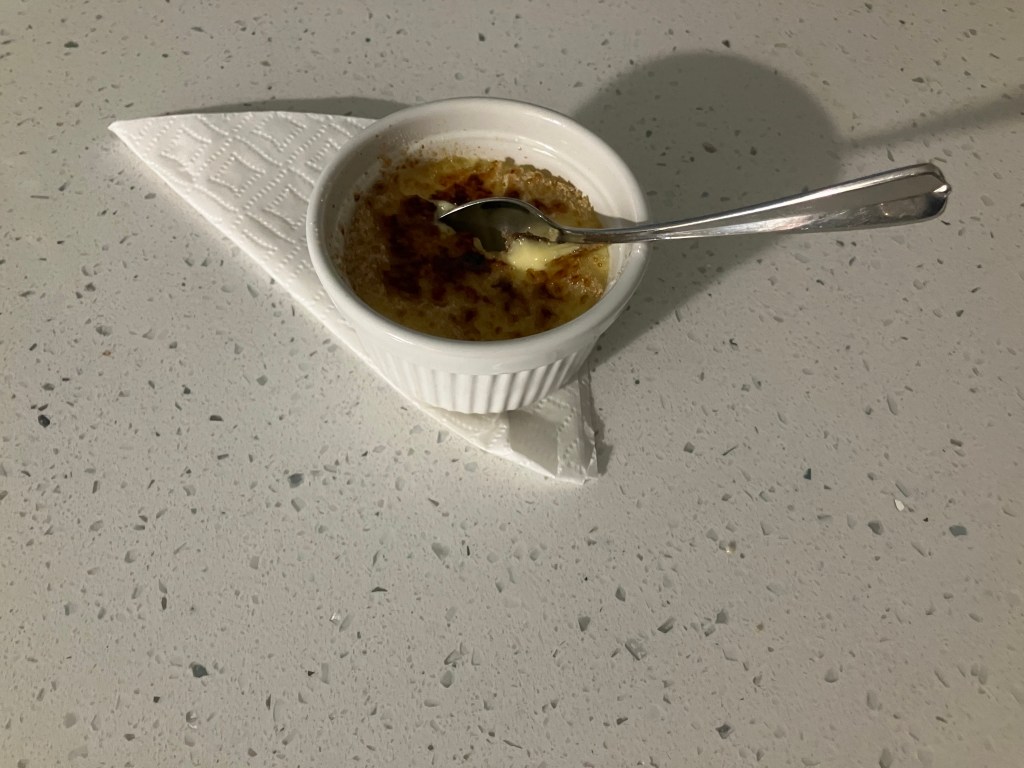
Serves 2

16 hours in total, 90 mins preparation

Crème brûlée is more involved than the other recipes I have thus far posted and has the potential to involve a few non basic kitchen items, but you can get around all that if you choose. I will explain a few shortcuts at the bottom.

Ingredients:

1 handful of dried cranberries
2 dried pitted California prunes
1/2 cup orange juice
1 tablespoon of lingonberry jam
1 tablespoon of white granulated sugar
1/2 cup heavy whipping cream
1 large egg yolk
1/2 teaspoon white granulated sugar
1 teaspoon vanilla bean paste
2-3 teaspoons brûlée sugar
Non-stick cooking spray

Overnight – Place a handful of dried cranberries and 2 dried California prunes in a glass of orange juice. Cover with cellophane and place in fridge to sit overnight. Allow the fruit time to soak up the orange essence. At least 12 hours with the juice should suffice.

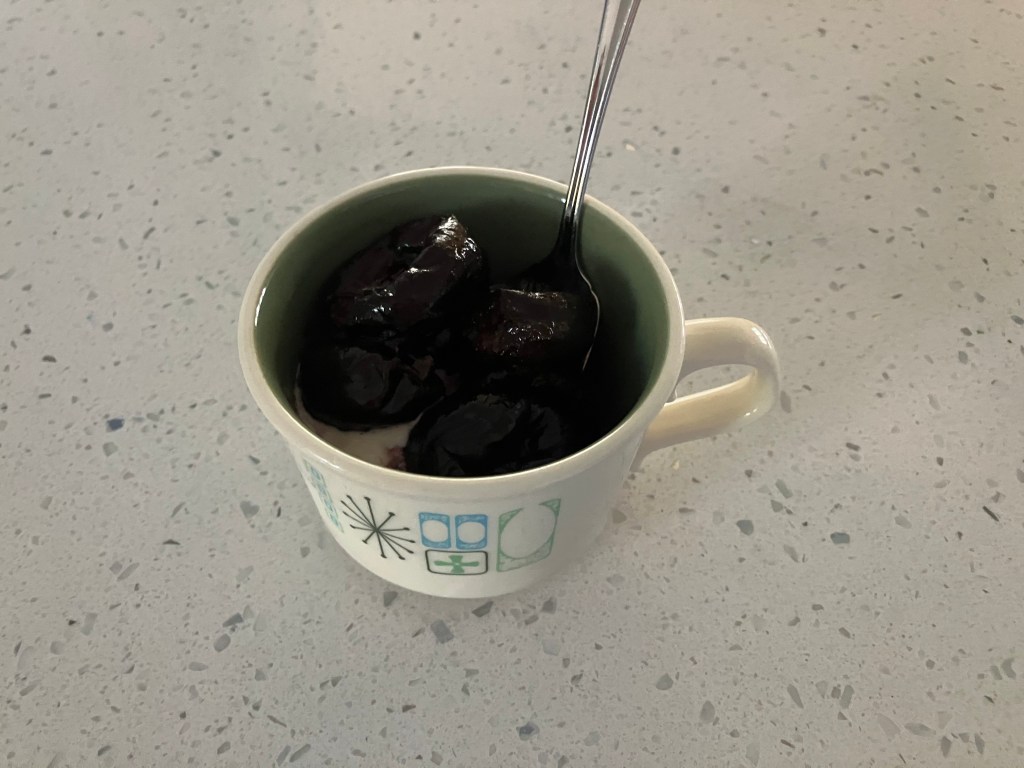
Day of – Preheat oven to 300 degrees. Remove your prunes and cranberries from your glass of orange juice and place in a small saucepan over the stove. Add 1 tablespoon of white granulated sugar. Cook for about 5 minutes on low heat, breaking up the fruit as you stir it. Add a tablespoon of lingonberry jam to the saucepan and mix in with the other fruit. Allow to meld together with the heat, stiring as needed until mixture reduces by a 1/3 and no liquid remains and a compote has come together.

Spray two ramekins with non-stick cooking spray. Ladle a generous scoop of the fruit compote into the two ramekins, making sure the bottoms are covered. Set aside.

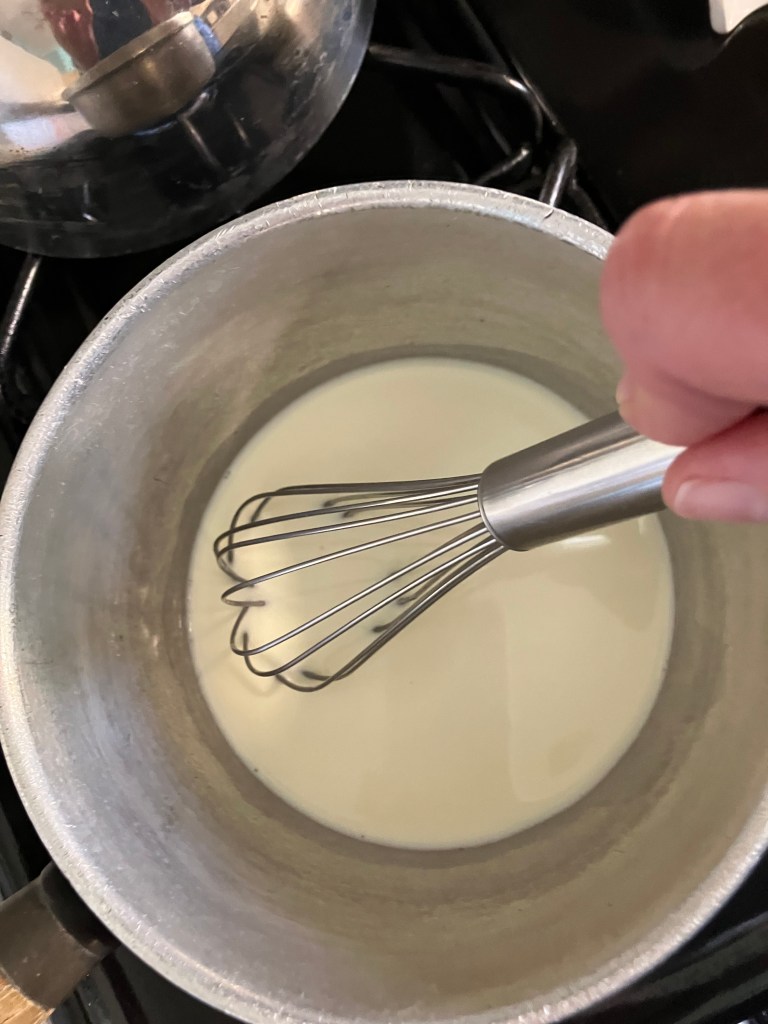
In a clean saucepan, heat heavy cream with a 1/2 teaspoon of white granulated sugar. Heat over medium, whisking constantly until it just reaches the boiling point. Remove from heat.
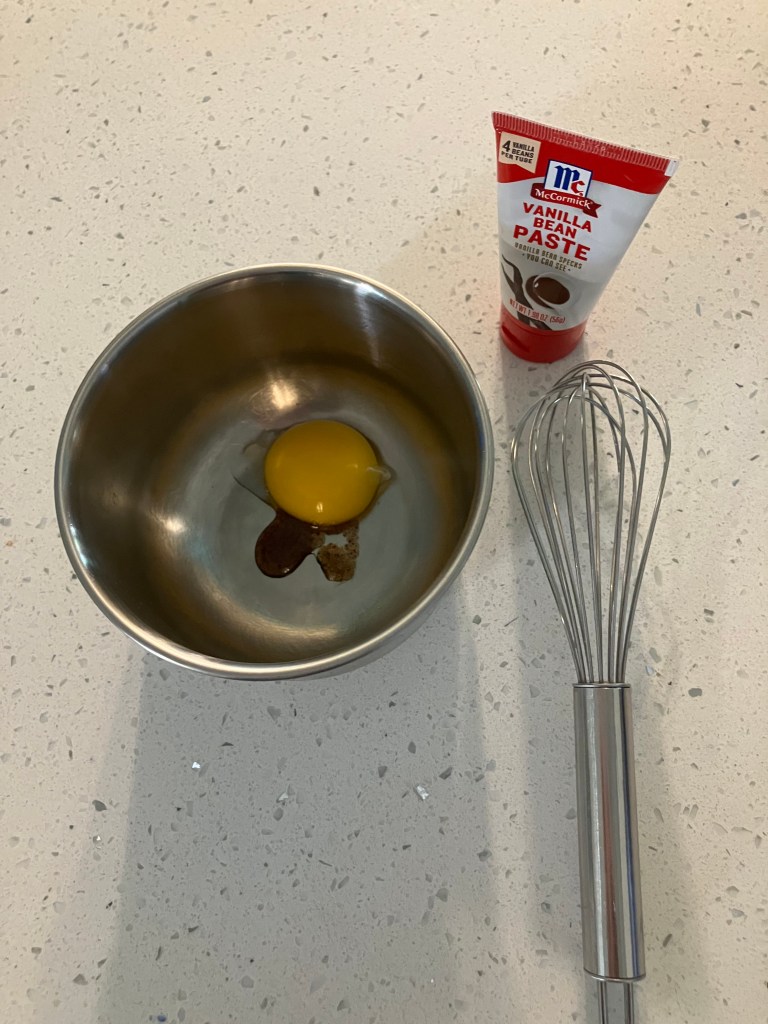
Quickly separate egg, and place only the yolk into a small mixing bowl. Add 1 teaspoon vanilla bean paste to the egg.
Whisk until combined. Add cream and sugar mixture from your saucepan, a little at a time, whisking while you are adding. Make sure to go slow, and be patient. If you add the cream to the egg and vanilla too quickly, it will begin to cook the egg. You don’t want the egg to cook or become solid. After all the cream has been whisked into the egg and vanilla, strain the mixture through a fine mesh sieve into a clean bowl.

Pour half the cream and egg mixture over the fruit compote of one ramekin. Use the other half for the second ramekin.
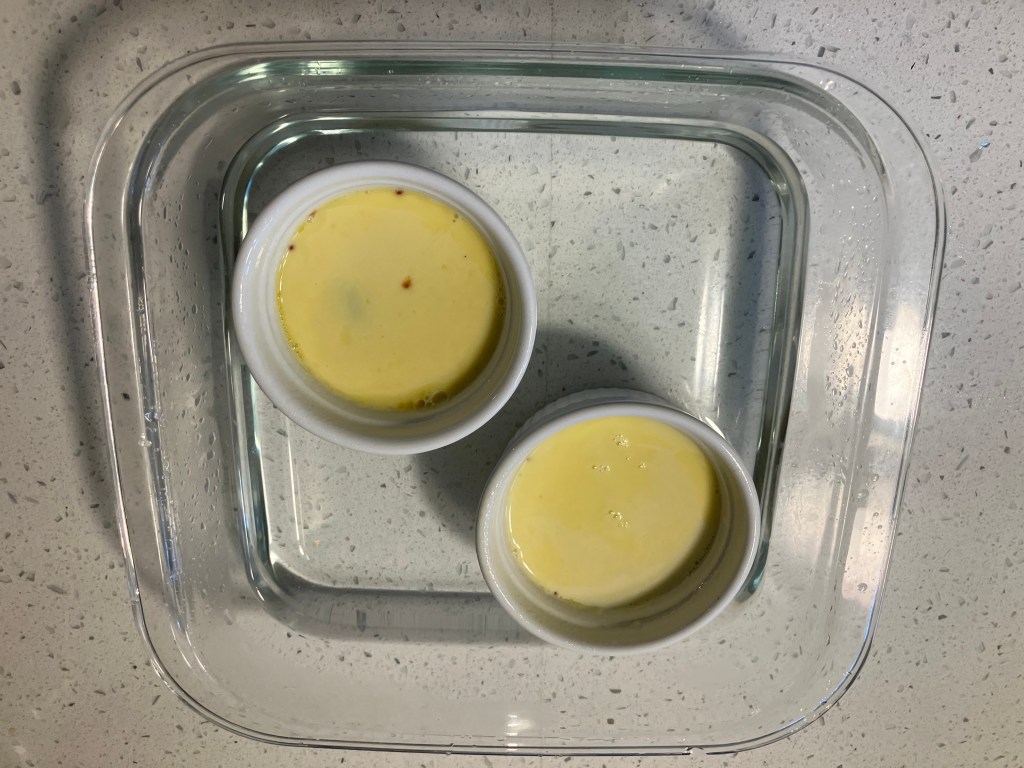
Using a shallow glass dish, begin creating a “bain-marie” or a hot water bath. Fill the glass dish with hot water. Fill only partially. Place the ramekins in the water, allowing hot water to rise to half the height of the outside of the ramekins. See photo.

Place the “bain-marie” with ramekins in your oven once it has reached 300 degrees. Bake on rack that is just a little lower than the middle rack. Bake for 30 minutes. It will be done, when the centers jiggle only ever so slightly. When cool enough, wrap with cellophane and place in your refrigerator to cool for 2 hours.

When ready to serve, sprinkle the top of each with a generous amount of brûlée sugar and torch until evenly caramelized. I have owned a handy Williams Sonoma Butane Torch for many, many years. It still works. It’s basic, but it does the job.
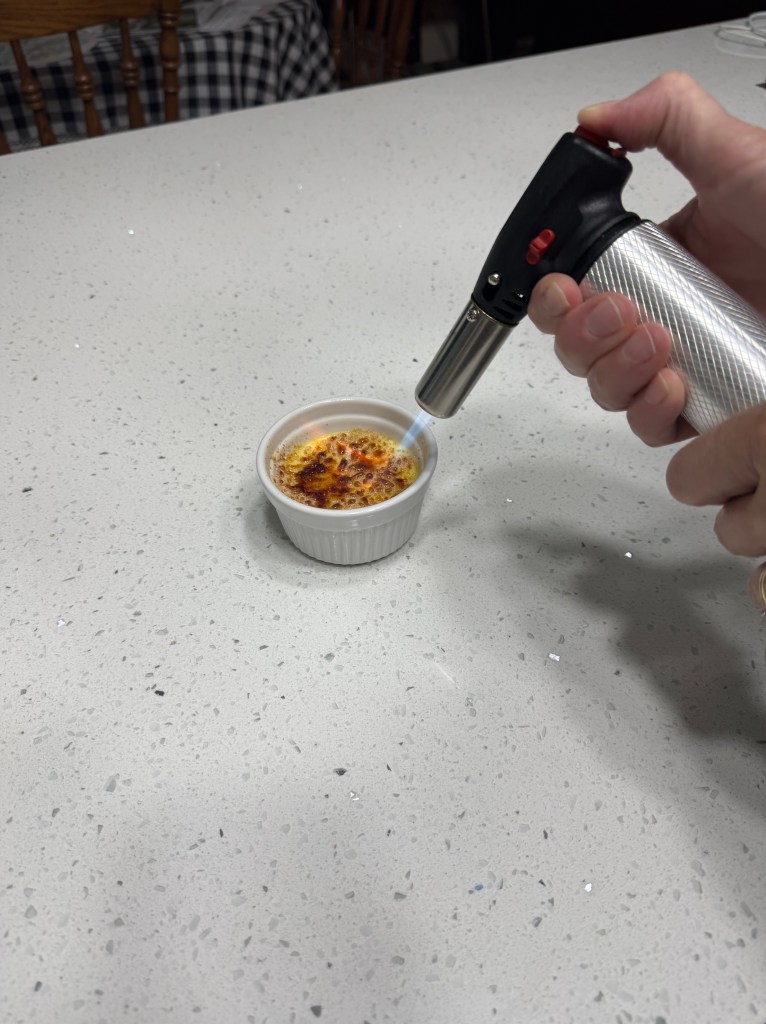
Note – No need to purchase fancy brûlée sugar. You can easily make your own with light brown and granulated white sugar. Take 1 cup firmly packed light brown sugar and spread it evenly out on a parchment lined baking sheet. Bake at 200 degrees for 35 minutes. Remove from oven. Cool to room temperature and push through a fine sieve. Mix with 1 cup white granulated sugar and store in an airtight container. It should keep for a few weeks.

Note – If you don’t own a kitchen torch, try until a candle lighter. It might work in a pinch! Just make sure to hover over the sugar to brown it. It’s okay to light it on fire for a brief second, but make sure it doesn’t char.

If you are doing the prune challenge, don’t forget to eat 5 extra prune today, as only two were used in the recipe; half going into each ramekin.

Crack open the top of the brûlée sugar with satisfaction. Smell the aromas as you lift the first bite to your lips. Enjoy with a cup or coffee, your favorite tea of a mug of chocolat chaude (Hot Chocolate)!

Engaging Reads · Uncategorized

Pecan Pancakes with Maple Syrup Infused Prunes

Day 5/7 – Thursday, October 24, 2024

We’ve made it to day five and it doesn’t get any more simple than this! Just lovely. The maple syrup infused prunes were a touch of deliciousness. I made this recipe up, but you can tweak it as you see fit. Everyone has their favorite pancake recipe. Go with yours if you like and try the maple infused prunes along side and see how it all comes together. Go crazy!

Ingredients:

6 California Prunes
1/4 cup water
1 tablespoon of real maple syrup, plus more to top your cakes
1 cup of all-purpose flour
1 teaspoon baking powder
1 large egg
1/4 cup vegetable oil
3/4 cup buttermilk
1 tablespoon unsalted butter
1/4 cup pecans, plus more for topping

Heat a 1/4 cup of water on medium heat in a small saucepan. Once the water is boiling, add a tablespoon of maple syrup to the water and stir, making a simple syrup. Once the syrup has dissolved, add all six prunes and reduce the heat to low and cover.

Place one leveled cup of all-purpose flour to a medium sized bowl. Add a teaspoon of baking powder to the flour. Whisk lightly, just until mixed. Crack an egg into the flour and powder. Pour 1/4 cup vegetable oil and 3/4 cup buttermilk into the well made by the egg. Mix until batter holds few lumps. Add more buttermilk if batter is too thick for your liking. Pour in 1/4 cup chopped pecans and stir just until combined.

Allow batter to sit and rise for a few minutes.

Give a quick check to your prunes. You want to make sure they are not dissolving into a paste. We want them to remain in tact. If they look like they are breaking down, turn the heat off and remove the pan entirely.

Melt a knob of unsalted butter in a cast iron pan. Pour batter into the pan. If you follow the recipe as written above, batter will be thick and you will need to cook each side longer than you may initially think. Watch for air bubbles to pop on the uncooked side and be patient. Do not flip pancakes over until edges are golden and crispy and several bubbles and appeared. My cook time in total was 4 minutes on each side, as my pancakes were very large. Repeat for remaining pancakes.

Plate your pancakes.

Take a fork and gently remove each maple soaked prune, one by one and place them gently around your pancake. Pour desired amount of syrup on your cakes. Scattered chopped pecans on top. Pour yourself a cup of orange juice, coffee or tea and enjoy!

Note – You can use any sweetener you like to top your pancakes, but try to stick to real maple syrup for the simple syrup to infuse the prunes.

Further Note – A quick substitute for buttermilk when none is on hand. Add a teaspoon of distilled vinegar to a cup of milk. Let stand until bubbles/thicken presents itself.

Uncategorized · Vintage Ads

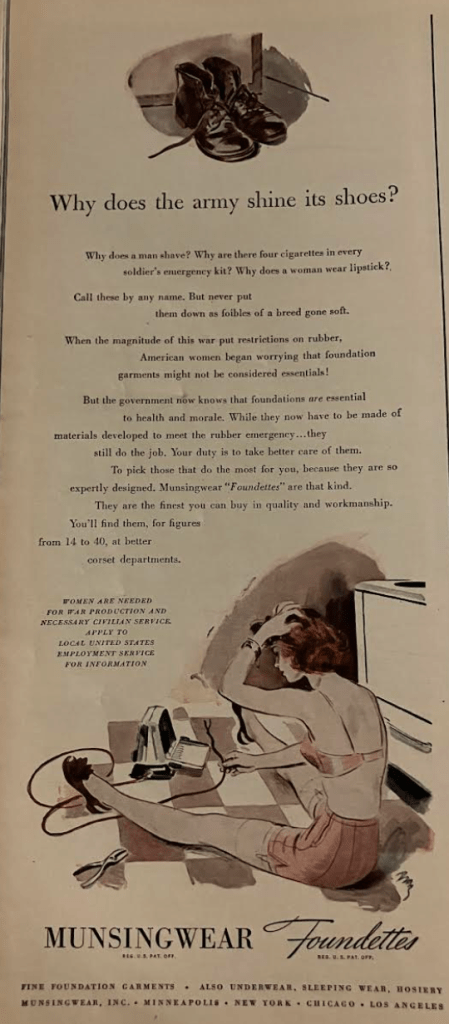
Munsingwear – Lifts More Than Your Spirits!

Vintage Advertisement of the Week – October 24, 2024

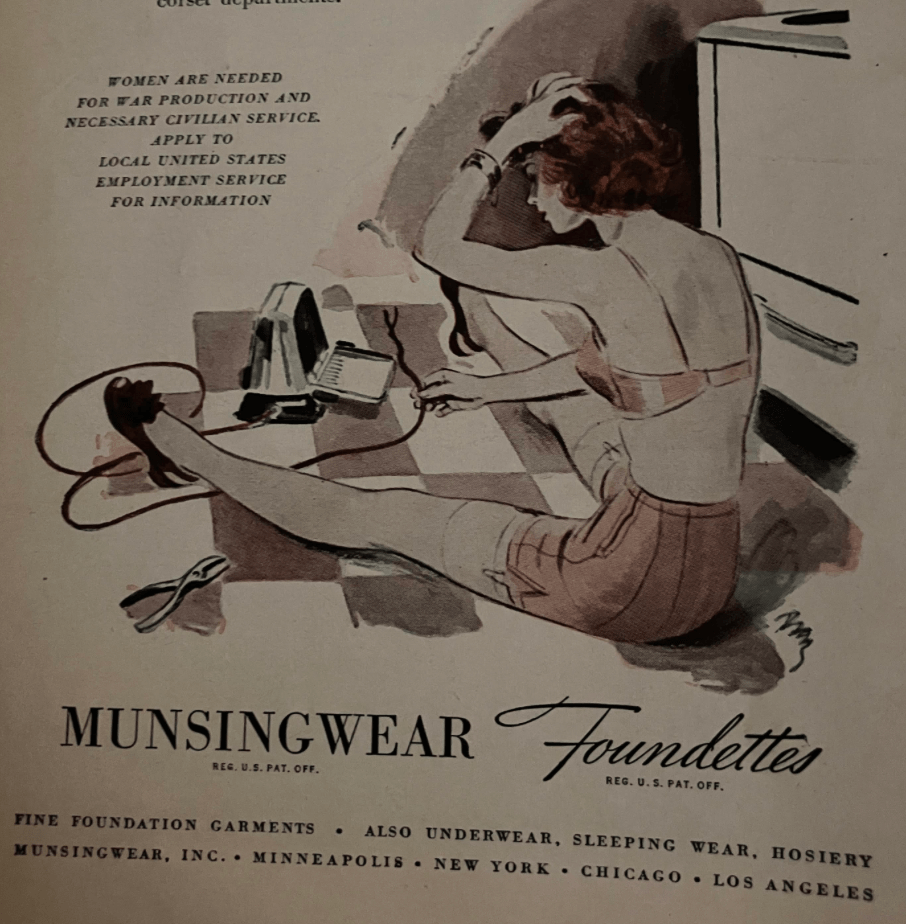
Advertisement taken from Life Magazine, September 27, 1943

The main theme for 80 percent of all ads featured in Life Magazine during WWII was war related. It dominated all facets of life. One could not escape it – the war. In some ways it is quite commendable. In others, I can see how it might have been a drag. Such a heavy cloud of responsibility loomed over everyone. One false step and you were playing into the hands of the Axis. Advertisements of this period were rife with guilt and fear.

Didn’t buy enough war bonds or stamps? You’re playing right into the hands of the enemy. Images like this loomed large:

Illustrator – John Maxwell, for the Philco Corporation (Life Magazine – April 19, 1943) (Note, I’m not sure what Maxwell was doing with Mussolini. Is that a lollipop he’s eating? Is he trying to paint Mussolini as an infant? For some reason I cannot get Kojak out of my head. Hitler and Hirohito look like they came straight from a nightmare though – legitimately.)

Contemplating using your automobile to get downtown? Better think again and use your own two feet. You won’t be able to replace those tires anytime soon, because rubber is needed for the war, not you. Not to mention wasting gas. Save the car only for emergencies. Ads like this with cars stuck in garages, unable to be used, were common sights:

Life Magazine – September 13, 1943

This week’s ad, leans on the flip side of guilt, morale. Questions like:

  • Why does a man shave?
  • Why are there four cigarettes in every army mess kit?
  • Why does a woman wear lipstick?
  • Why does the army shine its shoes?

Why bother? Why do all this when there is a war on? Because it bolsters humanity. It connects us with who we are and what we value. So why should the reader of Life Magazine care if materials used to make women’s undergarments (rubber and nylon) are considered as part of the essential materials list? Because even during war time, people like to feel attractive.

Another good reason, was it was an extremely influential periodical of its day. Maybe the most influential.1 Even though Life Magazine’s readership was overwhelming male, they still tried to reach their female readers. It was one of the most highly read publications of its time. At one point during the war, its circulation topped 13 million copies.2 That’s a lot, considering the entire US population 139,928,165.3

Back to our ad and why it matters. At first glance, we may think, who on earth would buy this scene? A pretty young 16-25 year old female is sitting on her kitchen floor in her underwear trying to fix the frayed wire of a toaster. Who traipses around their house in their underwear doing DIY projects? Wearing shoes, nonetheless? It is a bit strange to me.

That aside, I love the fact that Munsingwear has chosen to highlight the pluck and industriousness of the young female spirit. She can take it as it comes. A frayed wire with no man around to ask for help? No problem! She can fix it herself. She’s got the grit. She’s got the know-how.

Not enough rubber or nylon4 to make the girdle she’s used to wearing, no matter, she’s got gumption, she’s got that can-do attitude. She can get used to these newer knit fabrics and save the rubber and nylon that would have been used on her girdle to put toward the war effort.

This ad does not specify that the undergarments they are selling are made of knitted materials instead of rubber, but we should assume they are spun elastics.5 Tires were rationed not long after the attack on Pearl Harbor, January of 1942 to be specific.6 So they surely were not made with any rubber. Nylon was needed for making parachutes, tire cords, ropes, aircraft fuel tanks, shoe laces, mosquito netting and hammocks.7

My favorite part of this ad is the call Munsingwear puts out to all women. That little paragraph that pleads, “Women are needed for war production and necessary civilian service. Apply to local United States employment service for information.”

Not only can you fix frayed wires, saving your toaster (reduce, reuse or do without)8, but you can also help with the war effort and get paid doing it. And, you can do it in style, by wearing Foundettes. Just like a war can be won starting from a strong foundation, a woman’s successful day can start out by wearing Foundettes!

Oh yes, and that toast? It’ll be ready in a jiffy!

  1. Plotz, David. “The Best Magazine Ever Published Was Life Magazine, in Summer 1945.” Slate Magazine, 27 Dec. 2013, slate.com/human-interest/2013/12/life-magazine-1945-why-it-was-the-greatest-magazine-ever-published.html.
    ↩︎
  2. “BACKGROUND · World War II in Life Magazine Advertisements · Western CT State University Archives’ Digital Collections.” Archives.library.wcsu.edu, archives.library.wcsu.edu/omeka/exhibits/show/world-war-ii-in-life-magazine-/background.
    ↩︎
  3. “US Population: From 1900.” Demographia.com, 2019, demographia.com/db-uspop1900.htm.
    ↩︎
  4. “WWII and the Nylon Riots! | Rosie the Riveter.” Rosietheriveter.net, rosietheriveter.net/wwii-and-the-nylon-riots/.
    ↩︎
  5. “War Corsetry.” Www.corsetiere.net, http://www.corsetiere.net/Spirella/War_corsetry.htm.
    ↩︎
  6. The National WWII Museum. “Rationing.” The National WWII Museum | New Orleans, http://www.nationalww2museum.org/war/articles/rationing-during-wwii.
    ↩︎
  7. Spivack, Emily. “Stocking Series, Part 1: Wartime Rationing and Nylon Riots.” Smithsonian Magazine, Smithsonian Magazine, 4 Sept. 2012, http://www.smithsonianmag.com/arts-culture/stocking-series-part-1-wartime-rationing-and-nylon-riots-25391066/.
    ↩︎
  8. “Use It Up, Wear It Out, Make It Do, or Do without – FDR Presidential Library & Museum.” Www.fdrlibrary.org, http://www.fdrlibrary.org/use-it-up-wear-it-out-make-it-do-or-do-without. ↩︎
Uncategorized

Creamy Chicken and Cheese Risotto with California Prunes

Day 4/7 – Wednesday, October 23, 2024

Needing a break from the sweet stuff, I decided to try my hand at making risotto with prunes. I would not call myself an outstanding chef by any stretch. I say this, for any self respecting chef will tell you, it’s not a true risotto without saffron. Since I don’t have saffron and I can’t leave the house to get any, this shall suffice.

Ingredients:

6 pitted California Prunes
1/4 cup of minced onion
1 tablespoon of unsalted butter
Dash of garlic powder
1 cup chicken stock, plus 1/2 cup more on hand
2/3 cup dry Arborio rice
1/4 cup dry white wine
Stream of heavy cream
Shredded Asiago cheese

Take 6 pitted California prunes and place them in a small bowl. Pour a 1/4 cup of white wine over the prunes to help them moisten. I used River Road Uncorked Chardonnay, as it’s what I had available. Any dry white wine will do. Feel free to just use water, if you want to skip the alcohol.

While the prunes are plumping, dice a 1/4 onion, finely. Melt a tablespoon of unsalted butter in a sturdy pan. Once the butter has melted, add the onion and sauté until translucent.

Add 2/3 cup dry arborio rice. I used Vigo, but any arborio rice will suffice. Stir the rice, along with the butter and onion until the rice turns a golden brown color. Sprinkle garlic powder (to your liking) and stir.

Add the prunes and wine to the pan of rice. Stir.

Pour half the chicken stock into the pan, just enough to cover. Keep heat at low to medium temperature, just enough to cook the rice, but not so much that it will boil the liquid off too quickly. You want the rice to slowly absorb the stock. The key to a decent risotto is patience. Keep an eye on the rice. Add more chicken stock as necessary to keep the rice covered, but not flooded with liquid. Cook for at least 20 minutes, added more stock and stirring as needed. (Note – I ended up cooking my rice for about 25 minutes and adding more stock than I had initially planned, as I was not confident the rice was cooked. It’s a bit like the chip and dip game! That’s why it is a good idea to have extra stock at the ready.)

Once the rice is cooked. Slowly stir in a stream of cream until the rice turns a paler color. Plate your cooked rice. I chose to grate fresh asiago cheese on top for a little salty treat. Asiago, Parmesan, Romano, any of these would work well.

The verdict? What a shock. I truly adored this dish. I know I must sound like a broken record. Every dish I have made has surprised me. Yet, most of the dishes so far were sweet dishes. Dishes that can take prunes and highlight their natural sugars. I thought the pairing of chicken stock and prunes would not go well. Pork and beef maybe, as prunes tend to bit hearty and evoke a meaty quality to them, but chicken? My theory is, prunes are a bit of a chameleon – taking on the flavors of ingredients around them.

With regard to the promise of feeling less sluggish and having more energy, per the vintage California Prune Grower’s Ad, I’m not there yet. Having this health bug to weigh me down doesn’t help and isn’t really great timing to see if prunes help with this or not. Nevertheless, we march on.

This is one dish I will make again. If you dare to try your hand at creamy chicken risotto with California prunes, tweak it, make it your own. Feel free to comment on things you changed. I would love to hear your thoughts on how to make a good dish great!

Uncategorized

Understanding Narcissism – Buddy Willard

Chapter 8 of the Bell Jar starts out with a universal lament. As Esther is riding up with Mr. Willard (Buddy’s Dad) to visit Buddy at the sanatorium, she considers the Christmas season that just passed. This paragraph is a perfect example of Plath’s architectural gift as a writer.

“It was the day after Christmas and a gray sky bellied over us, fat with snow. I felt overstuffed and dull and disappointed, the way I always do the day after Christmas, as if whatever it was pine boughs and candles and silver and gilt-ribboned presents and the birch-log fires and the Christmas turkey and the carols at the piano promised never came to pass.

At Christmas I almost wished I was a Catholic.”

Can we not all relate to this feeling? The feeling of being let down during the holidays? Do we not all have a little bit of Charlie Brown in us? Searching for the meaning of Christmas. Hoping to be lit by its promised magic, and depressed when we either can’t find it or it doesn’t come. We could say Esther is incapable of finding the magic, since she is obviously very depressed, but this chapter is a flashback and we cannot be absolutely certain to know what state of mind Esther was in when she made her trip up the Adirondacks to visit Buddy.

As they drive further north into the mountains, Esther’s mood grows bleaker and bleaker. Another delicious phrase Plath writes on the first page of Chapter 8, “I don’t know what we talked about, but as the countryside, already deep under old falls of snow, turned us a bleaker shoulder, and as the fir trees crowded down from the gray hills to the road edge, so darkly green they looked black, I grew gloomier and gloomier.” As they draw closer, her sour mood increases, her dread at having to see Buddy building.

I found Plath’s description of the sanatorium’s color scheme as “liver” to be fantastic. Can’t you just picture it? Perhaps, liver was considered a soothing color back in the day? More likely, if this were real life, it would have been what was on sale in industrial quantities. Some writers might have chosen maroon, mahogany, or just plain brown to describe the walls and furnishings. Plath chose “liver” and it is one of the most humorous parts of this chapter.

After Mr. Willard left Esther and Buddy alone, (much to Esther’s dismay) Buddy brings up the subject of marriage. Esther tries to explain to Buddy she doesn’t want to get married, ever. She cites a former conversation they had about choosing to live in the country or the city, as her means to explain this to him. How she cannot be happy, as she wants two mutually exclusive things.

Esther’s inner dialog is a wheel of conflict. She wants to be seen as pure to the opposite sex, but desires sexual affection, as men of that age were able to do. She wants to go to college, to be a successful writer, to get the best scholarships and awards, to do something fulfilling with her life, that doesn’t involve the practicality skills such as shorthand. This goes against the norm of the day. The one that pushed women to become mothers and stay home to tend to their family and household, and forgo a profession. She wants to have the status of being Mrs. Buddy Willard, but does not want to be Mrs. Buddy Willard. Esther is a perfectionist who wants it all, even if “all” conflicts with itself.

The absurdity of the ski scene is striking. The fact that Buddy, a man who has never skied before, is insistent that he can teach Esther how to ski, merely because he has watched others do it so many times before, highlights just how cocky and narcissistic Buddy really is.

Here we find our protagonist, Esther, at the top of a mountain, being goaded by Buddy to ski down a slope, she was not comfortable traversing. Inexperienced skier Buddy pressured her to take the tow rope, up, higher and higher. He pressured her, knowing she was a perfectionist and would never say no. That she had to master everything that came her way.

So, when Esther took that fateful trip down the side of the hill and breaks her leg, in two places, we see the full face of Buddy Willard plain as day. Is he concerned for Esther? Does he offer an apology or even acknowledge his role in the tragic event? No. He smiles. Not an awkward apologetic smile, but a “queer, satisfied expression” came over his face. Even if that expression came about as a nervous reaction, he doesn’t retract, withdraw or make his expression blank, knowing he is displaying an inappropriate expression, but he gives a “final smile”.

What a jerk. I wouldn’t want to marry Buddy Willard either. No matter how good looking or how much money he had, he is a conceited ass. How could one live with someone like that? Someone that makes an ashtray for his supposed love, a love who doesn’t smoke. Someone who plays on that same loved one’s insecurities. Her insecurity being that she is a perfectionist. He knows she’ll take any bait he dangles in front of her. He is a classic narcissist, always needing to be right, to be in control and to put those whom he “loves” down to lift himself up.

Esther is better off without Buddy Willard.

Uncategorized · Vintage Ads

Drunken Prunes and Ice Cream

Day 3/7 – Tuesday, October 22, 2024

Still feeling under the weather, dear reader. So, with that in mind, I whipped up a really quick and easy snack. All you need are three ingredients for this one.

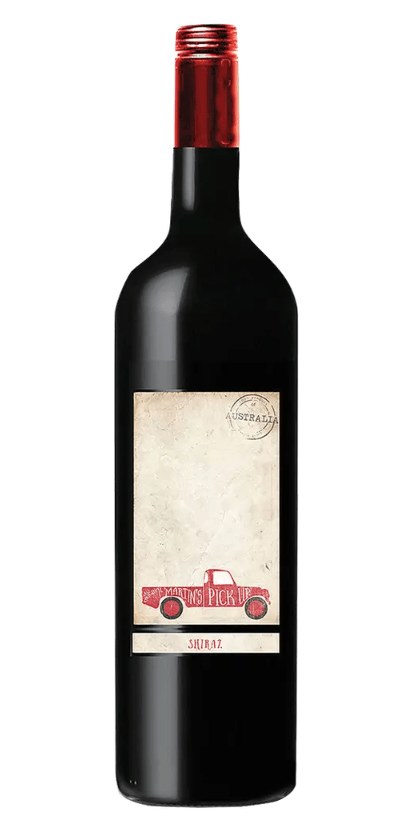
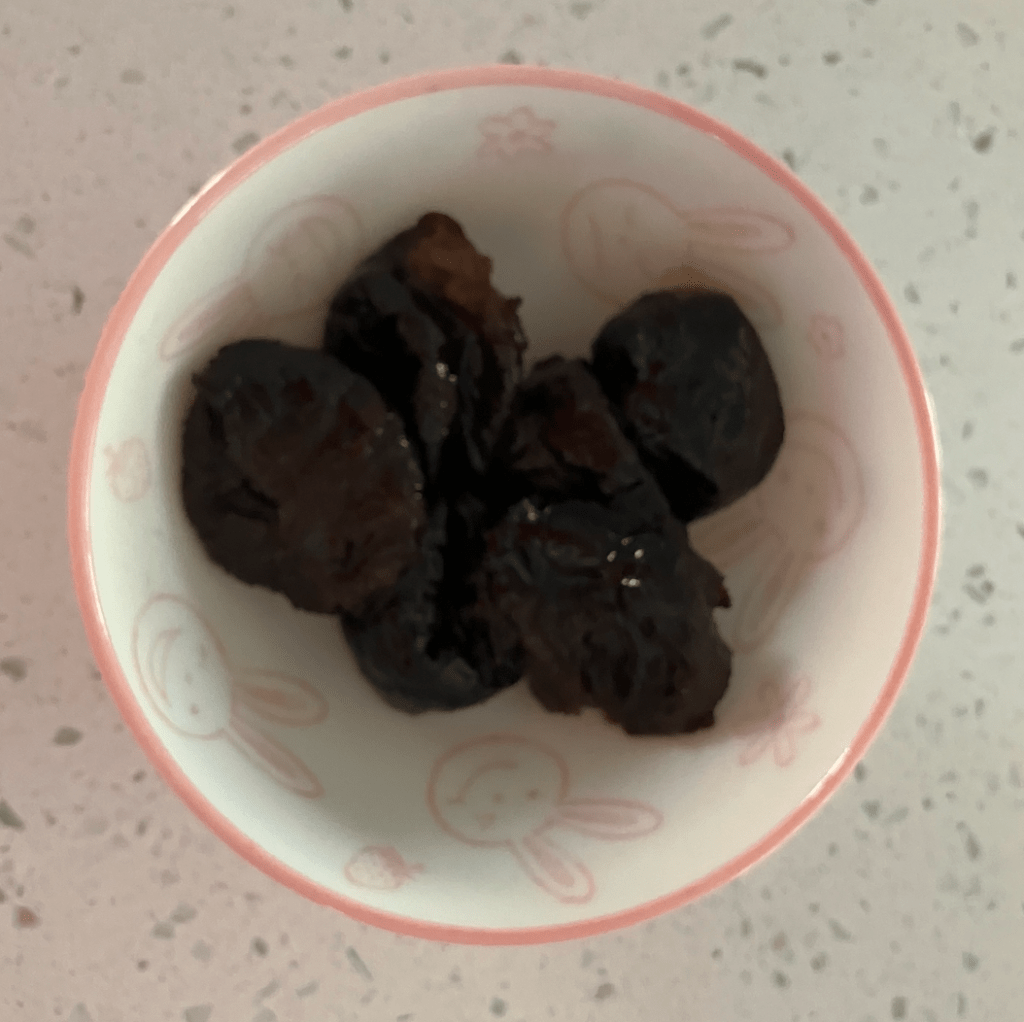
Take 6 California Prunes (pitted) and put them in a small bowl. Pour red wine over the prunes, just until covered. I used Martin’s Pickup Shriaz, because it’s what I had on hand. Any red wine will do. Cover the bowl with food grade wrap to keep the air from drying the prunes out. Soak for at least 12 hours. I started the soaking process before I went to bed. My prunes had been soaking for around 16 hours.

When you get hungry and want a treat, drain the remaining wine off your prunes. Place a scoop of your favorite ice cream in a dish and add the prunes on top. I used Tillamook’s Waffle Cone Swirl Ice Cream, as, again, it’s what I had in the freezer. (Disclaimer – I don’t actually eat ice cream much at all. Maybe twice a year. It was another house inhabitant’s ice cream.)

I had hoped originally to recreate Franks’ Amazing Prunes and Mascarpone Dessert, the recipe for which you can find at Something New For Dinner’s website. I believe very much in using what you have. We did not have mascarpone cheese, nor did we have mint. Thus was born, the concoction above.

For not being an ice cream aficionado, I enjoyed this very much.

As for the star of the show, the drunken prunes, they were insanely moist, plump and delectable. Even with this terrible cold, I enjoyed them tremendously. The tide of my impression of prunes is turning toward a favorable one.

For those of you who choose to not indulge in sprits, you can try soaking these in nonalcoholic wine, or plain old grape juice overnight. I am guessing they will plump up just as nicely.

One change I would make is, if I could have chosen a different ice cream it would have been the good old fashioned New York Vanilla. Tillamook is great, but Kemps New York Vanilla would do for me. Why New York vanilla you ask? I like eggs. They add body. Other vanillas often don’t have egg in their finished product.1

As for myself, I am crossing my fingers, the little bit of alcohol might help me get rid of this bug sooner, as I would love to make a few more involved dishes with prunes to display.

  1. https://oldschoolpastry.pastrysampler.com/all-about-ice-cream-difference-between-new-york-philadelphia-french-and-italian-ice-cream/#:~:text=Basic%20Differences%20Between%20New%20York,made%20from%20cream%20and%20eggs. ↩︎
Uncategorized · Vintage Ads

Stewed Prunes with Vanilla Sugar and Star Anise

Day Two/Seven – Monday, October 21, 2024

A quick disclaimer. I am under the weather pretty badly today. I was trying to decide if I would continue with my adventure into the world of prunes this week. I chose to forge forward, but given my low energy, I thought I would do a simple, quick recipe.

Stewed prunes do not sound good. Actually, they sound God awful. But, these were surprisingly fantastic! I cannot say how pleased I was at the outcome. I made this recipe up by riffing off instructions for stewed prunes I found in my Grandma’s old cookbook, “The American Woman’s Cook Book” from 1948.1 The steps to make this snack are quite simple.

Pour 1/2 cup of water into a small saucepan. Add 6 prunes to the water and bring to a boil. Add a sprinkling of vanilla sugar and one whole star anise. After a hard boil is achieved, turn heat down to a simmer. Simmer for 20 minutes. Then remove from heat. Let stand for another 20 minutes to cool and blossom. Enjoy!

The star anise and vanilla sugar are optional. Technically, you can make stewed prunes with just prunes and water. I used the vanilla sugar and star anise to jazz it up.

I am especially fond of Nordic Sprinkle’s vanilla sugar. The sugar plus the anise makes the prunes taste very Scandinavian indeed!

These stewed prunes were simple and quick to make. They turned out plump, moist and delicious. I would make these again. They were hands down better than dried prunes.

What other additives would be good in stewed prunes? Maybe cinnamon and orange? If you have any ideas, please share them with me. I plan to make stewed prunes again this week.

Hopefully, I will have more energy tomorrow and can make something a bit more involved. Stay tuned dear reader!

  1. Home, Delineator, and Ruth Berolzheimer. The American Woman’s Cook Book. Garden City Publishing, 1948.
    ↩︎
Uncategorized · Vintage Ads

Old Fashioned Oats with Cinnamon and Prunes

Day One/Seven – Sunday, October 20, 2024

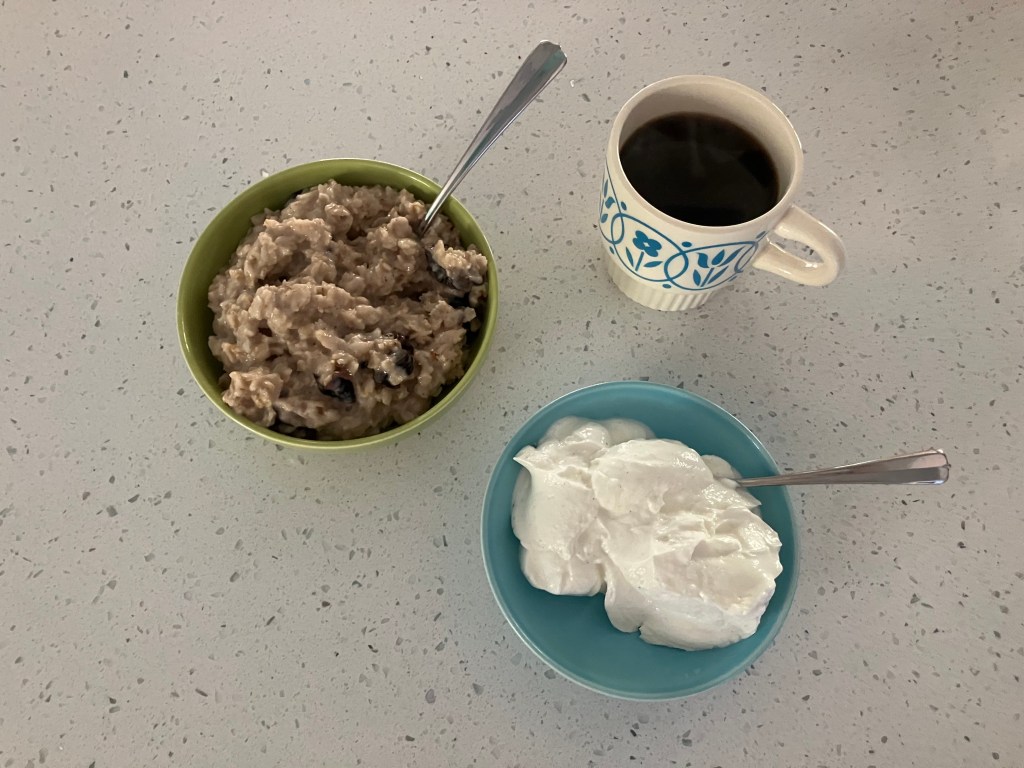
Lunch today was a variation of Flourishing Foodie’s Stewed Prunes with Oatmeal. I made some alterations right off the bat. I wanted to be very easy on the stomach, so I decided to just cut the prunes up and add them to the oats as they were cooking. I opted to use old fashioned oats instead of instant, as old fashioned oats stick with a body a bit longer. I cooked 1/2 a cup of old fashioned oats in 1 cup of water. Then I added 6 diced California Prunes (Sunsweet Pitted Prunes). Six actually seemed like a generous amount of prunes. But, I wanted to consume what the vintage ad suggested. I tapped in a dash of ground cinnamon.

While the oatmeal was cooking, I snacked on the almonds the recipe suggested adding. As I had already eaten my fair share by the time the oatmeal was nearing done, so I omitted adding almonds. I considered using the orange slices, but the oranges I had on hand did not look the best, so I skipped those too.

Once the prunes softened and the oatmeal was fully cooked, I added about a tablespoon of honey. I finished the oatmeal, by added a splash of oat milk to cream it up. I enjoyed the oatmeal with a cup of coffee and cup of Siggi’s Icelandic Yogurt for more protein.

All in all, I found the addition of prunes to be pleasant. Reminiscent of a cross between dates and raisins. I may try this oatmeal again this week, but with more of a nutty, salty appeal to it.

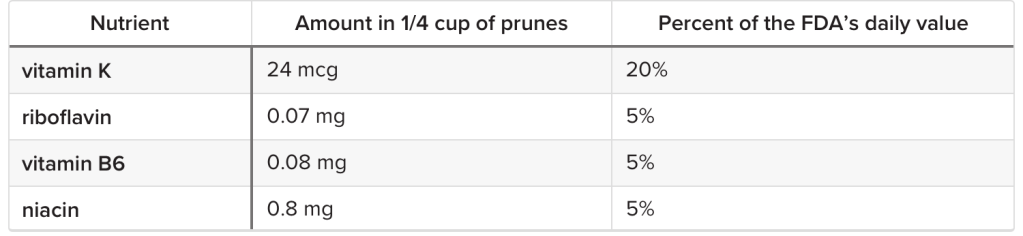
Time will tell if those six prunes will give me more energy. It can’t hurt to have more potassium in your diet. One serving of prunes also contains:

Table Found on Heathline.com.

I honestly am not holding my breath, but it is worth a try.

Uncategorized · Vintage Ads

Feeling Sluggish? Try California Prunes!

Vintage Advertisement of the Week – October 13, 2024

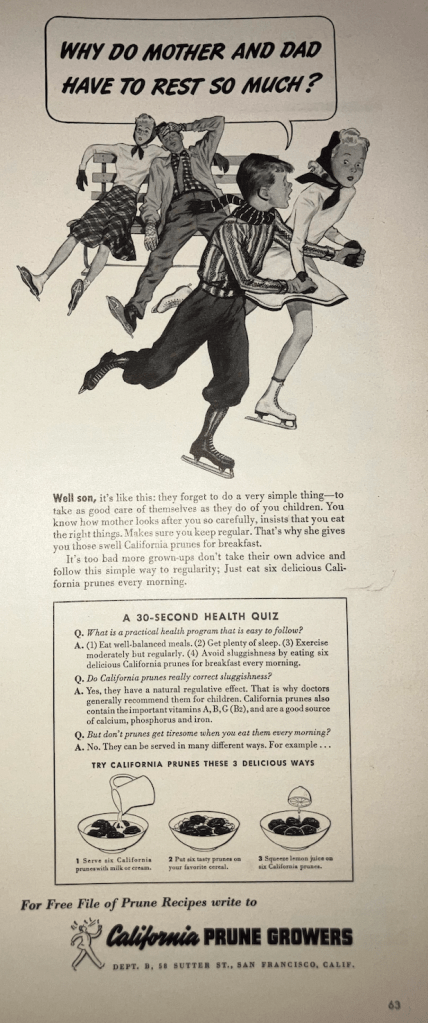
California Prune Growers Advertisement – Life Magazine, January 5, 1942

Those poor California Prune Growers. What they’ve had to endure over the years. There really is no great way to sell prunes, is there? They tried their best, especially during the war years, but they had a lot of ground to make up.

During the late 1800’s, eager and ambitious California farmers over planted plum trees, designated for the prune industry. Their goal in doing so, was to push out the supply of prunes being imported from Europe. By 1900 they succeeded in doing just that. 85 prune packing plants were up and running in California1. The price of prunes dropped as suppliers in the Eastern United States and overseas mixed poor quality fruits with the California prunes, degrading the product. Prune fanatics throughout the world were not thrilled with the cheapening of their beloved dried fruit.2

Enter the war years, the WWII years, to be specific. Dried fruits were considered to be a processed food. Certain processed foods, such as prunes, were rationed in the United States from March of 1943 to August of 1945.3 This coupled with the ever-changing landscape of wartime trade policies and the sale of prunes plummeted.4 It was the second biggest blow to the industry since the inferior fruit debacle. The California Prune Growers needed a plan.

What angle could they take to sell their product? Prunes have to be one of the least exciting of all fruits, dried or otherwise. My grandparents ate them. The only cake I ever remember eating that my maternal grandmother made was prune cake. Sounds gross, but it actually was pretty good. It tasted like spice cake with white boiled frosting. I think my maternal grandpa actually ate stewed prunes. As a kid of the 80s, it sounded so depression era disgusting, I never tried them.

In fact, prunes got such a bad rap throughout the 20th century, marketers changed their name to dried plums in 2001, to get away from just the type of ad you see above. (18 years later in 2019, they changed it back to prunes.)5 Rebranding didn’t work.6

Back to our wartime ad…

The money is on regularity. Mother keeps you kids regular by serving you prunes, she should practice what she preaches. So should Dad. If you possess digestive regularity, you will naturally have more energy.

Other ways people can have more energy? In Dad’s case, he could not work so many hours at the office. Maybe he’s under a lot of pressure to meet a deadline at the insurance agency or he had to work a double shift at the factory to meet his quota for the war effort. Or, maybe his factory makes him work swing shift hours and his sleep schedule is so screwed up he can barely keep his eyes open during his “normal waking hours”. On weekends, he is expected to fix everything that breaks around the house inside and out. Not to mention mow in the summer and shovel in the winter. There are loads of things that could contribute to Dad feeling weighed down and tired.

As for mother, she is most likely exhausted from dusting, vacuuming, sweeping, tending her victory garden, volunteering with the PTA, bluing and starching clothes, feeding said clothes through the wringer washer, hanging up clothes to dry on the line in the basement during winter, ironing them once they are dry, doing dishes and making beds. I’ll bet her feet hurt from walking to and from downtown, since they only have one car and Dad needs it to get to work. Women had plenty of things to keep them busy during the day. There was no lack of drudgery in one’s life.

Oh wait, this is the 40s. The kids probably did help out. Making their own beds and setting the table. “Jimmy” probably knew how to use the push mower. “Sally” most likely helped with the dishes and dusting. Everyone had their roles. But, the brunt of life’s responsibilities fell squarely on the parents’ shoulders. As usual.

All this talk about prunes got me thinking. Would their campaign actually help one feel more energized and regular? More fiber in one’s diet can’t be a bad thing. Maybe it would be a good idea to try to incorporate more prunes in my own life. Personally, I don’t mind having some prunes now and again. You can make a valiant attempt to trick your mind into thinking you are eating chocolate. For a split second it works, until your brain catches up with reality.

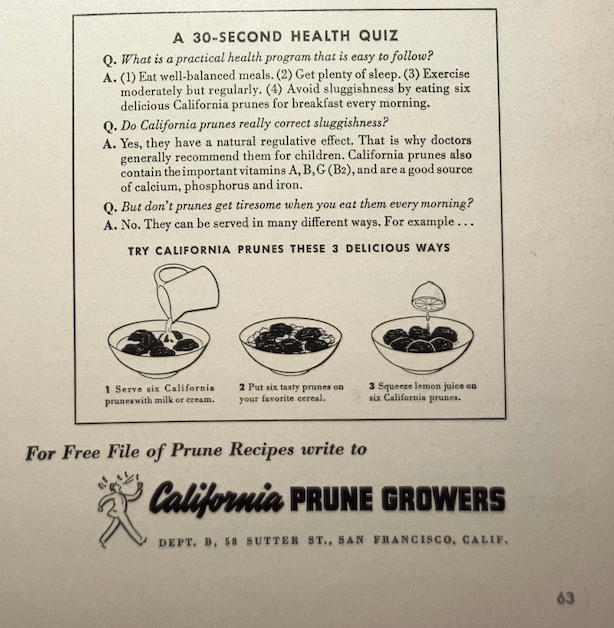
I read their 30-second health quiz and I am sold on trying it out. Beyond regularity, prunes have enormous health benefits. Flourishing Foodie7 highlights these benefits as:

Sounds like I’ve been missing out on a fantastically, nutritious food choice. What a dope I’ve been!

Starting Sunday, October 20, 2024, I am going to try a seven day prune challenge.

Without a doubt, I will grow sick and tired of snacking on prunes, so, I will try to find fun recipes to try. (Prune cake and prune whip anybody?) Are you willing to try this with me? Maybe you have a recipe that includes prunes that you care to share?

Even though this first recipe is not technically vintage, I would love to give another shout out to Heather Hands of Flourishing Foodie. I will try her recipe for Oatmeal with California Prunes. (Check her blog out, it’s gorgeous.) I will post a picture of my version on the 20th!

Prune’s Away!

  1. “History.” California Prunes | Prunes. For Life., californiaprunes.org/history/.
    ↩︎
  2. “History.” California Prunes | Prunes. For Life., californiaprunes.org/history/.
    ↩︎
  3. Springate, Megan. “Food Rationing on the World War II Home Front (U.S. National Park Service).” Www.nps.gov, 16 Nov. 2023, http://www.nps.gov/articles/000/food-rationing-on-the-world-war-ii-home-front.htm.
    ↩︎
  4. “History.” California Prunes | Prunes. For Life., californiaprunes.org/history/.
    ↩︎
  5. Koger, Chris. “Dried Plums No Longer: California Prunes Have New Brand.” The Packer, 23 May 2019, http://www.thepacker.com/news/retail/dried-plums-no-longer-california-prunes-have-new-brand. Accessed 14 Oct. 2024.
    ↩︎
  6. The Society Pages. “Re-Branding the Prune – Sociological Images.” Thesocietypages.org, 2016, thesocietypages.org/socimages/2012/01/10/re-branding-the-prune/. Accessed 14 Oct. 2024.
    ↩︎
  7. Hands, Heather. “Flourishing Foodie.” Flourishing Foodie , 16 Apr. 2020, http://www.flourishingfoodie.com/blog/2020/3/16/oatmeal-with-stewed-california-prunes. Accessed 14 Oct. 2024.
    ↩︎
Coffee Break · Uncategorized

The Great Pumpkin Waltz

Just in time for the upcoming holiday.

“Next year at this same time, I’ll find a pumpkin patch that is real sincere and I’ll sit in that pumpkin patch until the Great Pumpkin appears. He’ll rise out of that pumpkin patch and he’ll fly through the air with his bag of toys. The Great Pumpkin will appear and I’ll be waiting for him! I’ll be there! I’ll be sitting there in that pumpkin patch… and I’ll see the Great Pumpkin! Just wait and see, Charlie Brown. I’ll see that Great Pumpkin. I’ll SEE the Great Pumpkin! Just you wait, Charlie Brown!” ~ Linus Van Pelt

https://www.youtube.com/watch?v=fxGJA5AoFV4 (The Great Pumpkin Waltz) – by the Vince Guaraldi Trio

Charles M. Schultz – It’s the Great Pumpkin Charlie Brown 1966