
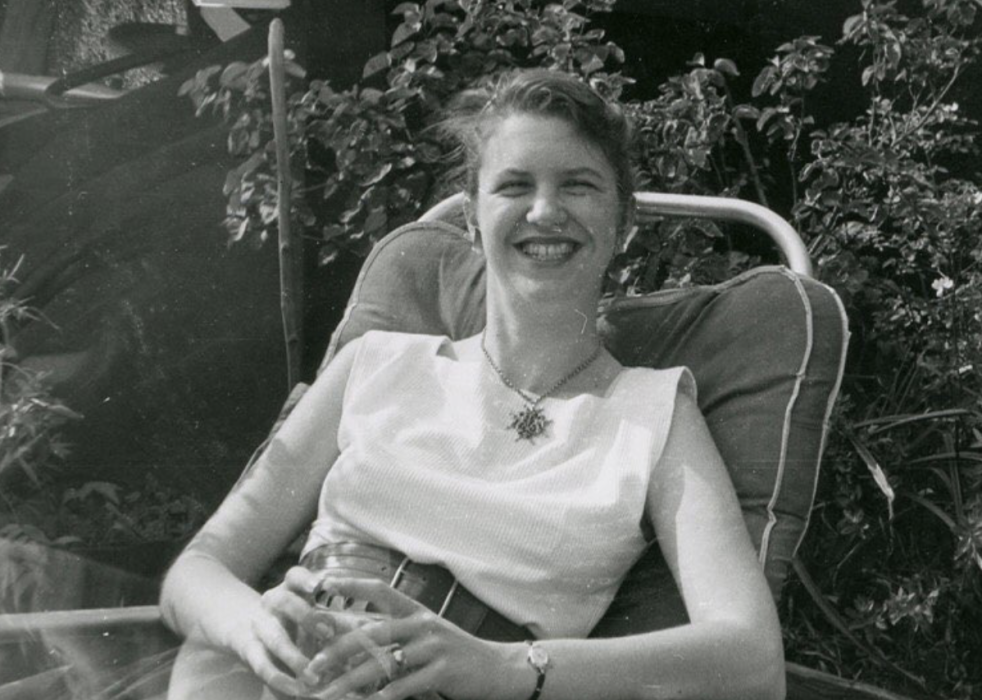
While reading The Bell Jar this time around, I noticed the first three chapters have descriptive themes.
- Chapter 1 – Attire
- Chapter 2 – Surroundings
- Chapter 3 – Gastronomy
In Chapter 1 we get no further than Page 2 before Plath sets her sights on apparel. It is a well known fact, Sylvia Plath was obsessed with clothes and envied the rich girls at Smith. Girls who didn’t have to worry about maintaining their scholarships, because their parents paid for their schooling out of very deep pockets. Plath came from a lower-middle class family and had to take jobs during the summer. She saved money for college and clothes by nannying for the wealthy Mayo family, working in a field as a farmhand and waitressing during summers.
I counted no fewer than twelve instances in Chapter 1 alone where Plath details apparel to illustrate Esther’s opinion about herself or people around her.
Chapter 1 – Apparel
“…uncomfortable, expensive clothes, hanging limp as fish in my closet.” Page 2
“…tripping around in those same size seven patent leather shoes…black patent leather belt, black patent leather pocket book.” Page 2
“…skimpy, imitation silver-lamé bodice stuck to a big fat cloud of white tulle…” Page 2
“…posh secretarial schools like Katy Gibbs, where they had to wear hats, stockings and gloves to class…” Page 4
“…all the girls had pocketbook covers made out of the same material as their dresses, so each time they changed their clothes they had a matching pocketbook.” Page 5
“Doreen lounged on my bed in a peach silk dressing gown…” Page 5
“-the rest of us had starched cotton summer nighties and quilted housecoats, or maybe terry-cloth robes that doubled as beachcoats, but Doreen wore these full length nylon and lace jobs you could half see through and dressing gowns the color of skin, that stuck to her by some kind of electricity.” Page 5
“She (Doreen) was wearing a strapless white lace dress zipped up over a snug corset affair…” Page 7
“I wore a black shantung sheath that cost me forty dollars ($470 US dollars in 2024!)…the dress was cut so queerly I couldn’t wear any sort of bra under it…” Page 7

The New York Public Library Digital Collections. 1957. https://digitalcollections.nypl.org/items/04b53740-a8c2-0132-5c95-58d385a7bbd0
“When a man in a blue lumber shirt and black chinos and tooled leather cowboy boots started to stroll over…” Page 8
“…white lace pocketbook cover.” Page 8
“The thought of dancing with that little runt in his orange suede elevator shoes and mingy t-shirt and droopy blue sports coat made me laugh. If there’s anything I look down on, it’s a man in a blue outfit. Black or gray, or brown even. Blue just makes me laugh.” Pages 11-12
I won’t note each and every instance or Chapters 2 and 3, as reading list borders on tedium. Rather, I will simply note some of my favorites.
In chapter 2 surroundings become instrumental. Esther’s self-proclaimed alter ego, “Elly Higgenbottom”, is intrigued by Lenny’s pine paneled apartment with dead animal artifacts scattered or hung everywhere. I found it interesting that Esther tells us her drink becomes more depressing with each sip. She refers to it as “dead water”. More likely her situation around her becomes more depressing with each passing minute. One has to wonder if her drink takes on the presence of the dead animal heads and skins surrounding her, as she shrinks into the background.
Doreen’s smoke lingers in her room back at the Amazon, making her feel furious and frustrated upon her return.
The china white telephone, normally a lifeline, sat still and “dumb as death’s head”.
Her only saving grace in the entire chapter is a hot bath. She considers each and every bathroom she has bathed in during her life, and in great detail. The pink marble, griffin legged tubs, and coffin shaped tubs all spring to her mind. I find it interesting she recalls one tub as being “coffin” shaped. I had to look it up. This is a way to describe your standard single person fiberglass tub. Nevertheless, again with the reference to death.
She ends the chapter by describing the green hall carpet covered in Doreen’s jet of brown vomit, while Doreen’s blonde hair dabble into the vomit like “tree roots in a bog.” I just love that line.
Chapter 3
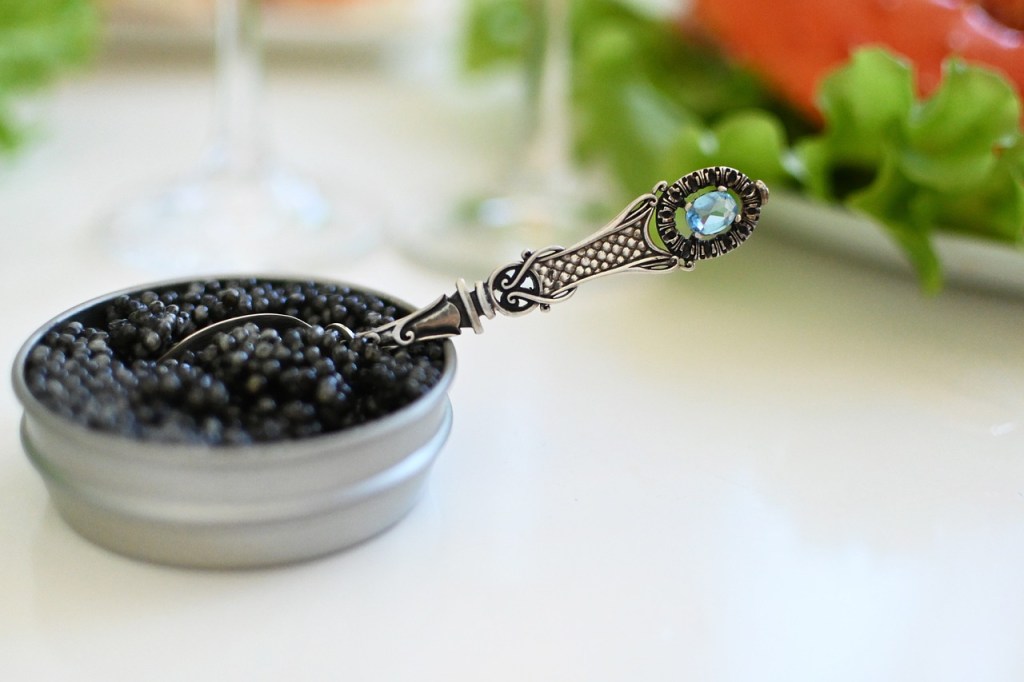
Photo Credit: Irenna at : https://pixabay.com/photos/black-caviar-caviar-fish-roe-7274201/
All about food…Plath is obsessed with food. Her journals and letters are littered with accounts of what she ate while at camp, on vacation, at school and just on the normal day to day. So it’s no surprise Plath makes Esther keenly aware of food. But not just any food. Food at the Ladies’ Day luncheon.
Yellow-green avocado pear halves, stuffed with crabmeat and mayonnaise, black gleaming caviar heaped in cut glass bowls1, and mountains of marzipan fruits are juxtaposed against memories of a blue collar burger, fries and vanilla frappes eaten at the hometown Howard Johnson’s (think Denny’s of today). She tells us about the guilt her grandmother doled out while eating supper. Making sure they all knew just how expensive each bite of meat cost.
Esther informs the reader she can eat whatever she wants and never gain a pound. (Plath often said that about herself. Don’t we all wish?) Dishes laden with sour cream, butter and cheese being her favorites.
This chapter is a particularly amusing one to me. Especially in the way she highlights the others sitting around the table, like they were all just taking up space (sad replacements for her wild and exciting friend, Doreen), as well as the way she introduces us to her boss, Jay Cee. More about those around her in another post when we touch on Esther’s depression and narcissistic tendencies as Plath highlights them through secondary characters.
One last note on food. My favorite part of Plath’s inclusion of food in Chapter 3 is when Esther is silently crying and eating her meringue and brandy ice cream. Not because it is funny, but because it’s relatable. She eats her own ice cream then absentmindedly makes swift work on Betsy’s proffered bowl. I think we have all been there. Eating mindlessly as we work through our worries.
- Does this make anyone else think of F. Scott Fitzgerald’s Story The Cut Glass Bowl, first published in Scribner’s Magazine in May of 1920? https://americanliterature.com/author/f-scott-fitzgerald/short-story/the-cut-glass-bowl/#google_vignette ↩︎
I would love to hear your favorite parts of Chapters 1-3. Did you have a favorite description?

 Tidbits and Timemachines